Table of Contents
The world of PC flight simulation has evolved dramatically, and 2026 brings unprecedented levels of realism and immersion to virtual pilots. Whether you’re navigating complex airliners through turbulent weather or dogfighting in high-performance military jets, the right flight stick serves as your primary interface to these digital skies. Understanding what separates an exceptional controller from a mediocre one has never been more crucial, especially with modern simulation titles demanding precise inputs and offering deeper systems modeling than ever before.
Choosing the perfect flight stick requires balancing technical specifications, ergonomic comfort, and compatibility with your preferred simulation genre. Today’s market offers everything from compact entry-level units to sophisticated HOTAS (Hands On Throttle-And-Stick) systems that mirror actual cockpit hardware. This comprehensive guide walks you through the essential features, technologies, and considerations that define the best flight simulation experiences in 2026, helping you make an informed decision without getting lost in marketing hype or technical jargon.
Top 10 Flight Sticks
Detailed Product Reviews
1. Logitech G X56 H.O.T.A.S Throttle and Joystick Flight Simulator Game Controller, 4 Spring Options, +189 Programmable Controls, RGB Lighting, 2x USB, PC - Black

Overview: The Logitech G X56 HOTAS represents the pinnacle of mainstream flight simulation hardware, delivering military-grade precision for demanding virtual pilots. This comprehensive throttle and joystick combo boasts Hall-effect sensors and an astounding 189 programmable controls, making it ideal for complex combat flight sims and space simulations where every command matters.
What Makes It Stand Out: The X56’s twin throttles with independent friction adjusters provide exceptional control for multi-engine aircraft, while the RGB backlighting integrates seamlessly with modern gaming setups. Its VR-optimized design places controls intuitively under your fingers, allowing blind operation during immersive sessions. The four-spring system lets you fine-tune stick resistance to match your preferred flight characteristics.
Value for Money: At approximately $250, the X56 sits in the sweet spot between budget controllers and ultra-premium options from Virpil or VKB. It offers 80% of high-end performance at 50% of the cost, though quality control inconsistencies in post-Saitek Logitech production have been reported.
Strengths and Weaknesses: Strengths include extensive programmability, robust software suite, and excellent VR integration. The separate throttle unit provides realistic ergonomics. Weaknesses involve occasional button ghosting, stiff throttle action out of the box, and a plastic construction that doesn’t feel as premium as the price suggests.
Bottom Line: The X56 remains a solid choice for serious sim enthusiasts seeking comprehensive controls without breaking into the $400+ premium tier. Just be prepared to potentially troubleshoot minor QC issues.
2. Thrustmaster T 16000M SPACE SIM DUO STICK (Compatible with PC)

Overview: The Thrustmaster T.16000M FCS Space Sim Duo delivers a dedicated dual-stick setup for space simulation enthusiasts. This ambidextrous pair leverages magnetic H.E.A.R.T technology to provide precision that rivals premium options, making it perfect for six-degrees-of-freedom games like Star Citizen or Elite Dangerous where simultaneous translation and rotation control is essential.
What Makes It Stand Out: The exclusive magnetic sensors ensure accuracy that won’t degrade over time, while the innovative Braille-style button identification lets you keep eyes on the action. Three detachable components per stick allow true left or right-hand configuration. The wide hand rests and weighted bases maintain stability during intense dogfights, and the 32 total action buttons provide ample control options.
Value for Money: Priced around $130-150 for the pair, this duo offers exceptional value. Competing dual-stick setups cost nearly twice as much, making this the most accessible entry point for serious space sim configuration without sacrificing precision. Individual sticks can be purchased separately if you decide to upgrade later.
Strengths and Weaknesses: Strengths include unmatched price-to-performance ratio, ambidextrous versatility, and reliable magnetic sensors. The T.A.R.G.E.T software enables deep customization and profile management. Weaknesses are the all-plastic construction that feels less premium, limited buttons per stick requiring shift functions, and lack of included throttles for atmospheric flight simulations.
Bottom Line: For space sim pilots seeking affordable six-DOF control, the T.16000M Duo is unbeatable. It’s a smart investment that delivers premium tracking at a budget price point.
3. Thrustmaster T16000M FCS (Compatible with PC)

Overview: The Thistmaster T.16000M FCS stands as the gold standard for entry-level flight simulation, offering precision far beyond its price class. This ambidextrous joystick utilizes magnetic H.E.A.R.T technology to deliver 16-bit resolution that remains consistent throughout its lifespan, making it ideal for aspiring pilots on a budget who want reliable performance without breaking the bank.
What Makes It Stand Out: The non-contact magnetic sensors eliminate physical wear, ensuring accuracy never degrades over time. Its fully ambidextrous design with three removable components accommodates left or right-handed pilots seamlessly. The Braille-style button identification system allows tactile navigation during intense maneuvers without visual reference, keeping you focused on the horizon.
Value for Money: At approximately $60-80, this joystick dominates the budget category. Nothing else offers this level of precision and durability under $100, making it the definitive starting point for flight sim newcomers before upgrading to premium gear. It’s an investment that retains value even as you expand your setup.
Strengths and Weaknesses: Strengths include exceptional accuracy, ambidextrous flexibility, and reliable performance. The T.A.R.G.E.T software provides extensive customization and macro programming. Weaknesses involve the lightweight plastic base that can shift during aggressive movements, limited 16-button layout requiring profile switching, and lack of integrated throttle axis for complete single-unit control.
Bottom Line: The T.16000M FCS remains the undisputed champion for budget-conscious simmers. It delivers professional-grade sensors at an entry-level price, making it essential for anyone starting their flight simulation journey.
4. Thrustmaster T-Flight Hotas X (Compatible with PC)

Overview: The Thrustmaster T-Flight Hotas X serves as the gateway drug to flight simulation, offering a complete throttle and joystick solution at an unbeatable price point. This budget-friendly HOTAS provides essential controls for newcomers exploring Microsoft Flight Simulator or casual combat flight games without overwhelming complexity or requiring extensive setup time.
What Makes It Stand Out: The integrated internal memory saves your programming directly to the device, eliminating software dependency when switching computers. Its unique dual-system rudder control lets you choose between handle rotation or progressive tilting lever based on personal preference. The wide hand-rest delivers surprising comfort during extended sessions, and the 12 buttons plus 5 axes cover basic flight functions adequately for most general aviation and light combat scenarios.
Value for Money: At roughly $50-70, this is the most affordable HOTAS on the market. It delivers a functional dual-controller setup that beats using keyboard and mouse, making it perfect for tentative beginners unwilling to invest heavily before committing to the hobby. The value proposition is unmatched for first-time buyers.
Strengths and Weaknesses: Strengths include the low price, comfortable ergonomics, and plug-and-play simplicity. The internal memory is a rare feature at this tier. Weaknesses are obvious: lower precision potentiometers that develop drift over time, limited 12-button layout restricting complex aircraft, and lightweight construction requiring desk mounting for stability during aggressive maneuvers.
Bottom Line: The T-Flight Hotas X is the ideal starter kit for flight sim curious gamers. While lacking long-term durability, it provides a taste of authentic flight control at a price that justifies experimental purchase.
5. Honeycomb Foxtrot Aviation Stick - flight stick for flight simulation, premium gimbal mechanism, 16bit Hall Effect Sensors, ambidextrous design, compatible with MSFS 2024/2020 for PC & Mac

Overview: The Honeycomb Foxtrot Aviation Stick targets serious flight simulation enthusiasts seeking premium build quality without boutique pricing. Engineered specifically for Microsoft Flight Simulator 2020/2024, this controller features an advanced gimbal mechanism and 16-bit Hall Effect sensors wrapped in a robust aluminum and glass-fiber chassis that exudes professional craftsmanship.
What Makes It Stand Out: The detent-free gimbal delivers buttery-smooth movement unmatched by spring-loaded competitors, providing realistic control feedback. Its ambidextrous ergonomic grip provides intuitive access to five two-way switches, four buttons, dual hat switches, and a rotary panel. The twist rudder axis eliminates need for separate pedals in basic setups, while the premium materials ensure longevity and consistent performance.
Value for Money: At approximately $200-250, the Foxtrot positions itself as a mid-premium alternative to VKB and Virpil. While lacking their extreme customization, it offers 90% of the performance with superior plug-and-play MSFS integration and a more approachable price point for serious hobbyists.
Strengths and Weaknesses: Strengths include exceptional build quality, precise Hall Effect sensors, and seamless Honeycomb ecosystem integration with their other panels. The smooth gimbal action feels incredibly natural for civil aviation. Weaknesses involve the limited button count compared to combat HOTAS units, absence of included throttle requiring separate purchase, and premium pricing that approaches entry-level boutique alternatives.
Bottom Line: For civil aviation simmers prioritizing realistic control feel and build quality, the Foxtrot is an excellent investment. It bridges the gap between mass-market and boutique controllers admirably, offering a compelling upgrade path.
6. Logitech G Saitek X52 Pro Flight Control System, Controller and Joystick Simulator, LCD Display, Illuminated Buttons, 2xUSB, PC - Black/Silver

Overview: The Logitech G Saitek X52 Pro represents a comprehensive flight control solution that bridges the gap between entry-level sticks and premium HOTAS systems. This integrated throttle and joystick combo features an intuitive LCD multi-function display that provides real-time game data, eliminating the need to glance at keyboard overlays during critical flight maneuvers.
What Makes It Stand Out: The standout feature is undoubtedly the LCD display, which offers customizable readouts for various flight parameters. Coupled with illuminated buttons and a progressive throttle with adjustable resistance and detents for afterburner/idle positions, it delivers an immersive experience. The precision centering mechanism uses non-contact technology on both axes, ensuring consistent performance without degradation over time.
Value for Money: Priced in the mid-range segment, the X52 Pro offers exceptional value for serious flight simulation enthusiasts. It competes favorably against purchasing separate throttle and joystick units, providing a cohesive ecosystem with powerful programming software that lets you create custom profiles for each aircraft.
Strengths and Weaknesses: Pros include the informative LCD display, robust software customization, comfortable adjustable grip for various hand sizes, and smooth throttle action. The illuminated buttons enhance usability in dim environments. Cons involve a somewhat dated design aesthetic, a learning curve with the configuration software, and occasional reports of quality control inconsistencies. The spring tension may feel light for users preferring stiffer resistance.
Bottom Line: The X52 Pro remains a solid choice for dedicated flight sim pilots seeking advanced features without venturing into premium price territory. Its integrated design and programmable capabilities make it ideal for complex civilian and combat flight simulations.
7. Thrustmaster T16000M FCS HOTAS (Compatible with PC)
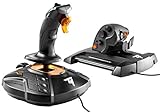
Overview: The Thrustmaster T16000M FCS HOTAS delivers professional-grade precision at an entry-level price point, making it the go-to recommendation for newcomers to flight simulation. This plug-and-play system combines a highly accurate joystick with a functional throttle quadrant, featuring 16 action buttons with tactile braille-style identification for intuitive operation.
What Makes It Stand Out: The implementation of Hall effect magnetic sensors sets the T16000M apart from competitors in its price class. This technology, typically reserved for premium controllers, provides 16-bit resolution precision without physical contact, ensuring zero degradation over time. The twist rudder function eliminates the need for separate pedals, while the comprehensive button layout includes an 8-way POV hat and multiple hat switches.
Value for Money: Representing arguably the best price-to-performance ratio in the HOTAS market, the T16000M offers features found in controllers costing twice as much. It’s an investment that grows with your skills, suitable for everything from space combat to civilian aviation.
Strengths and Weaknesses: Strengths include exceptional accuracy, affordable pricing, ambidextrous design, and reliable plug-and-play performance. The braille-style button markings are genuinely useful during intense gameplay. Weaknesses center on the all-plastic construction that feels less premium, throttle action that could be smoother, and a base that benefits from additional securing. The button layout, while functional, lacks the ergonomic refinement of higher-end models.
Bottom Line: For budget-conscious pilots demanding precision without compromise, the T16000M FCS HOTAS is unmatched. It’s the definitive starter system that remains capable even as your simulation ambitions expand.
8. Turtle Beach VelocityOne Flightstick Universal Simulation Controller Joystick for Air & Space Combat Simulation - Xbox Series X, Xbox Series S, Xbox One, Windows 10, and Windows 11 PCs
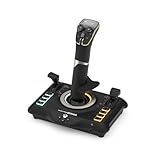
Overview: The Turtle Beach VelocityOne Flightstick represents a modern, multi-platform solution designed for the new generation of console and PC flight simulation. This versatile controller seamlessly bridges the Xbox and PC ecosystems while packing premium features typically found in specialized PC-only hardware, including a vibrant OLED flight management display.
What Makes It Stand Out: True multi-platform compatibility is the headline feature, enabling Xbox Series X|S and PC pilots to use the same high-end controller. The integrated OLED display provides intuitive configuration without alt-tabbing to software. With 27 programmable buttons, 8 axes, and customizable throttle/flap levers, it offers extensive control options. The non-contact main axes ensure long-term precision.
Value for Money: Positioned in the premium tier, the VelocityOne justifies its price through genuine Xbox certification and advanced features. For Xbox sim pilots, it’s one of few high-quality options available, eliminating the need for separate console and PC setups.
Strengths and Weaknesses: Pros include seamless Xbox/PC switching, crisp OLED display, abundant programmable controls, and modern non-contact sensors. The build quality feels substantial and the customization depth is impressive. Cons involve a premium price point that may deter casual users, limited community support due to its newer market presence, and software that, while functional, isn’t as mature as established competitors. The throttle levers, while versatile, lack the heft of dedicated quadrants.
Bottom Line: For Xbox flight sim enthusiasts unwilling to compromise on features, the VelocityOne Flightstick is currently the best-in-class option. PC users seeking multi-platform flexibility will also find it compelling despite the premium investment.
9. Thrustmaster Sol-R1 Flight Joystick, Hall Effect Technology for Ultra-Precise Gaming, 44 Buttons Ideal for Space Flight Simulation (compatible with PC)

Overview: The Thrustmaster Sol-R1 is purpose-built for space flight simulation dominance, featuring an unprecedented 44 action buttons packed into an ambidextrous, sci-fi inspired design. This specialized joystick addresses the complex control demands of games like Star Citizen and Elite Dangerous, where every function needs immediate access without keyboard reliance.
What Makes It Stand Out: The staggering 44-button count is unmatched in this category, with 21 buttons integrated directly into the detachable grip including dual triggers, dual hat switches, a ministick, and thumbwheel. H.E.A.R.T. HallEffect AccuRate Technology delivers 16-bit precision across X, Y, and Z axes, while the backlit design with interchangeable wrist and thumb rests ensures comfort during marathon sessions.
Value for Money: While commanding a premium price, the Sol-R1 costs significantly less than assembling comparable high-end HOTAS setups. For space sim devotees, the investment pays dividends in immersion and control efficiency.
Strengths and Weaknesses: Pros include the revolutionary button density, true ambidextrous versatility, exceptional Hall effect precision, and striking aesthetic. The base stability supports are thoughtful additions. Cons involve a steep learning curve for button mapping, overwhelming options for casual flight sim fans, and a design so specialized it underperforms in traditional atmospheric flight simulations. The configuration process demands patience and the grip may feel busy for users with smaller hands.
Bottom Line: The Sol-R1 is the definitive joystick for dedicated space sim pilots who demand every command at their fingertips. Its specialized nature makes it less suitable for general aviation, but for conquering virtual galaxies, it’s unparalleled.
10. Thrustmaster T-Flight Stick X (Compatible with Windows PC)
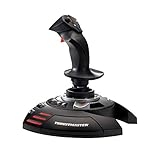
Overview: The Thrustmaster T-Flight Stick X serves as the quintessential entry point into flight simulation, offering plug-and-play simplicity at an unbeatable price point. This all-in-one joystick solution integrates a throttle lever and rudder control into a single unit, making it ideal for casual pilots or those testing their interest in flight sims without significant financial commitment.
What Makes It Stand Out: The “Plug & Play” philosophy eliminates all barriers to entry—no complex software, no calibration headaches, just connect and fly. The weighted base provides surprising stability during aggressive maneuvers, while the rotating handle with built-in lock offers intuitive rudder control without additional pedals. Adjustable resistance control lets users tailor the stick feel to their preference.
Value for Money: As one of the most affordable flight sticks from a major manufacturer, the T-Flight Stick X delivers remarkable value. It democratizes flight simulation access, providing core functionality at a fraction of premium controller costs.
Strengths and Weaknesses: Pros include immediate setup, rock-bottom pricing, stable weighted base, and integrated throttle/rudder functionality. The exclusive MAPPING and PRESET buttons offer basic customization, and internal memory retains settings. Cons reveal its budget nature: basic potentiometer sensors lack precision, limited button count restricts complex aircraft control, the plastic construction feels toy-like, and the integrated design prevents upgrading components separately. Long-term durability concerns exist for heavy users.
Bottom Line: The T-Flight Stick X is perfect for curious newcomers and casual flight sim fans on tight budgets. While serious enthusiasts will quickly outgrow its limitations, it capably introduces the fundamentals of flight control without requiring a major investment.
Understanding Modern Flight Stick Sensor Technology
Hall Effect Sensors vs Potentiometers
Modern flight sticks in 2026 predominantly use Hall effect sensors for axis detection, replacing the older potentiometer technology that dominated earlier generations. Hall effect sensors utilize magnetic fields to detect position changes, eliminating physical contact between moving parts. This frictionless operation translates to significantly improved durability and consistency over years of use. Potentiometers, while still found in budget options, suffer from physical wear that creates dead zones and erratic inputs over time. The magnetic approach maintains pinpoint accuracy throughout the controller’s lifespan, making it the preferred choice for serious simulation enthusiasts who demand reliability during critical flight maneuvers.
Advanced Haptic Feedback Systems
Force feedback has matured beyond simple vibration motors into sophisticated haptic systems that communicate nuanced flight envelope information. Modern implementations can simulate control surface buffet, gear extension vibrations, and even subtle aerodynamic stalls through precise tactile feedback. These systems help pilots develop muscle memory and situational awareness without constantly staring at instruments. The technology uses advanced actuators that provide resistance changes based on airspeed, G-forces, and system failures, creating a truly immersive training environment that bridges the gap between simulation and real-world flying.
Wireless Latency Improvements
2026’s wireless flight sticks have overcome the latency concerns that previously plagued early wireless controllers. Advanced 2.4GHz protocols with dedicated dongles now achieve sub-1ms response times that rival wired connections. Battery technology has also improved, with many premium units offering 40+ hours of continuous operation and hot-swappable power cells. However, serious sim pilots still prefer wired connections for absolute reliability during extended sessions, making hybrid models with both connectivity options particularly attractive for users who want desk cleanliness without sacrificing performance.
Key Features to Evaluate Before Purchasing
Axis Configuration and Precision
The number and quality of axes fundamentally determine your control authority in simulation. A basic flight stick offers pitch and roll control through two primary axes, but modern systems often include a twist axis for rudder control, eliminating the need for separate rudder pedals in casual setups. Premium units may feature additional analog axes on the stick itself – typically implemented as small thumb-controlled mini-sticks or sliders that can be mapped to view controls, zoom functions, or other aircraft systems. Resolution matters enormously; 16-bit axis resolution (65,536 discrete positions) provides smooth, granular control essential for formation flying and aerial refueling, while 12-bit resolution (4,096 positions) may feel stepped or jittery during precise maneuvers.
Button Layout and Customization Philosophy
The button arrangement should support natural hand movements without requiring you to look away from the screen. Modern flight sticks typically offer 12-20 programmable buttons, with premium models exceeding 30 inputs. Consider the tactile differentiation between buttons – hatswitches should have distinct click feedback, while trigger mechanisms need appropriate travel distance and pressure. Backlit buttons have become standard in 2026, with RGB customization allowing you to color-code functions by aircraft type or flight phase. The ability to create multiple profiles that switch automatically based on the loaded aircraft saves tremendous setup time and prevents control confusion when jumping between different simulation platforms.
Throttle Integration and Split Throttle Options
Integrated throttles transform a basic flight stick into a HOTAS system, crucial for twin-engine aircraft operation. Split throttle designs allow independent control of each engine, essential for managing engine-out scenarios and differential thrust maneuvers. The throttle mechanism should offer adjustable friction settings – some pilots prefer loose, responsive throttles for fighter jets, while others want stiff, deliberate movement for airliners where small power adjustments matter. Detents for idle, afterburner, and reverse thrust provide physical feedback for critical power settings, reducing the chance of accidental shutdowns or overspeed conditions during high-workload flight phases.
Ergonomics and Physical Design Considerations
Grip Design and Hand Size Compatibility
Flight stick grips come in three primary profiles: replica military grips modeled after actual fighter jet hardware, ergonomic civilian designs optimized for comfort during long-haul flights, and hybrid shapes that balance both approaches. Your hand size directly impacts which grip style works best – pilots with smaller hands may find replica grips fatiguing during extended sessions, while larger hands can struggle with compact civilian designs that position buttons too close together. Many 2026 models offer interchangeable grip modules or adjustable palm rests that accommodate different hand dimensions, ensuring the primary controls fall naturally under your fingers without stretching or cramping.
Weight and Base Stability
A flight stick’s base weight critically affects its usability, especially during aggressive maneuvering. Lightweight units may lift or slide during energetic stick inputs, breaking immersion and potentially causing missed inputs. Premium models weigh 5-8 pounds with wide, weighted bases that maintain position even during maximum deflection. Some designs incorporate suction cups or clamping systems for desk mounting, while others rely purely on mass and rubber feet. Consider your desk surface material and available space – glass desks require different mounting solutions than wood, and limited desk real estate might necessitate a compact base despite stability trade-offs.
Left-Handed and Ambidextrous Solutions
The flight simulation community includes many left-handed pilots who need appropriate hardware support. While truly ambidextrous flight sticks remain rare, several manufacturers now offer dedicated left-hand versions of popular models with mirrored button layouts. Modular designs allow users to swap grip positions or reconfigure button orientations through software. Some advanced units feature symmetrical bases that can be rotated 180 degrees, converting a right-hand stick to left-hand operation. When evaluating options, verify that critical buttons like the trigger and hatswitches remain accessible and comfortable in the alternative configuration.
Setup and Configuration Requirements
Mounting Solutions and Ergonomic Positioning
Proper flight stick positioning significantly impacts both comfort and control precision. Desk-edge mounts position the stick between your legs, mimicking real cockpit geometry, while floor stands offer greater adjustability at the cost of additional footprint. Some pilots prefer chair mounts that attach directly to their seat, ensuring consistent positioning regardless of desk changes. The mounting height should allow your forearm to rest parallel to the floor with a slight downward angle to the stick, preventing shoulder strain during long sessions. Consider whether the stick’s cable exits from the bottom or rear – bottom-exiting cables can interfere with mounting clamps and require careful routing to avoid binding.
USB Connectivity and Power Delivery
Most modern flight sticks connect via USB-C, though USB-A remains common for compatibility with older systems. Verify your PC has available ports of the correct type, or budget for a quality powered USB hub. Some high-end units with force feedback require external power adapters in addition to USB data connections, creating cable management challenges. USB hub integration within the stick’s base has become a popular feature, allowing you to connect additional peripherals like rudder pedals or button boxes through a single PC connection, reducing cable clutter and simplifying port management on your simulation rig.
Software Ecosystem and Profile Management
The included configuration software determines how easily you can customize controls and create aircraft-specific profiles. Modern packages offer graphical interfaces where you can drag functions to button images, test inputs in real-time, and import community-created profiles. Cloud sync capabilities let you transfer settings between computers or restore configurations after hardware upgrades. Some advanced software integrates directly with simulation platforms, automatically loading appropriate profiles when you select different aircraft. Evaluate whether the software supports macros, shift states (where holding one button changes the function of others), and axis response curve customization – essential features for complex aircraft with numerous systems.
Genre-Specific Flight Stick Considerations
Combat Flight Simulation Demands
Military flight simulations require rapid, precise inputs and extensive button access without releasing the stick. Look for designs with multiple hatswitches for view control and system management, dual-stage triggers for weapon selection, and durable construction that withstands aggressive maneuvering. The stick’s centering mechanism should provide firm, predictable return to neutral, crucial for gun tracking and formation flying. Combat sims often benefit from shorter throw distances that enable faster control inputs, while still maintaining enough physical travel for fine aim adjustments during air-to-air refueling or precision bombing runs.
Civilian Aviation and Airliner Operations
Commercial flight simulation emphasizes smooth, deliberate control inputs and long-session comfort. Flight sticks designed for this genre typically feature longer throws that prevent overcontrol, softer centering springs, and ergonomic grips that reduce fatigue during multi-hour flights. Integrated throttles should include realistic detents for climb, cruise, and idle settings, with smooth linear response curves. Button layouts prioritize autopilot controls, navigation system inputs, and communication functions over weapons management. Some civilian-focused sticks include dedicated flap and spoiler controls, reducing the need for keyboard inputs during critical approach and landing phases.
Space Simulation and Six-Degree-of-Freedom Control
Space simulators like Elite Dangerous or Star Citizen demand unique control schemes that blend traditional flight controls with six-degree-of-freedom movement. Flight sticks for this genre benefit from twist axes with strong centering for roll control, while using the primary axes for pitch and yaw. Additional analog inputs become crucial for lateral and vertical translation thrusters. Many space sim pilots use dual-stick setups (one stick per hand) for intuitive 6DoF control, requiring sticks with compact bases that can be mounted side-by-side. The button layout should support power distribution, shield management, and targeting systems that are unique to space combat and exploration.
Budget Tiers and Value Assessment
Entry-Level Options and Essential Features
Budget flight sticks in the $50-$150 range now offer surprising capability, typically including Hall effect sensors, 12-16 programmable buttons, and twist rudder functionality. These units prioritize value over premium materials, often using plastic construction that remains durable for casual use. While they lack the customization and advanced features of expensive models, many entry-level sticks provide excellent introduction to flight simulation. The key is identifying which essential features you cannot compromise on – typically axis precision and basic button count – versus nice-to-have extras like metal components or RGB lighting that can be sacrificed when budget constraints exist.
Mid-Range Features and Sweet Spot Value
The $150-$350 range represents the performance sweet spot for most serious sim pilots. These flight sticks feature all-metal gimbals, interchangeable grips, extensive button layouts with multiple hatswitches, and sophisticated software suites. Build quality jumps significantly, with metal components in high-stress areas and premium materials for grip surfaces. Many mid-range units offer modular throttle quadrants that can be separated from the stick base, providing HOTAS functionality without premium pricing. This tier often includes advanced features like adjustable tension, onboard memory for profiles, and compatibility with ecosystem expansions like rudder pedals and button boxes.
Premium Professional-Grade Systems
High-end flight sticks exceeding $400 target professional pilots, military training applications, and dedicated enthusiasts seeking ultimate realism. These units replicate actual aircraft hardware, use aerospace-grade materials, and offer unparalleled precision with 16-bit or higher resolution across all axes. Customization reaches extremes with fully programmable force feedback, interchangeable cams and springs for different aircraft feel, and integration with professional simulation software. While the price premium is substantial, the durability and fidelity justify the investment for users who log hundreds of hours annually or require equipment that matches real-world training standards.
Maintenance and Longevity Factors
Cleaning and Preventive Care
Regular maintenance extends flight stick lifespan significantly. Dust and skin oils accumulate on grips and around button seals, potentially causing sticky inputs or button failure. Use microfiber cloths slightly dampened with isopropyl alcohol to clean grip surfaces weekly, and compressed air to clear debris from around hatswitches and button crevices. Avoid harsh chemicals that degrade rubberized coatings. For units with metal components, occasional application of light machine oil to non-electronic moving parts prevents corrosion and maintains smooth operation. Store flight sticks covered when not in use to minimize dust accumulation, particularly important in households with pets or in dusty environments.
Firmware Update Procedures
Manufacturers regularly release firmware updates that improve compatibility, fix bugs, and occasionally add features. Establish a routine of checking for updates monthly, but always read release notes and community feedback before installing – occasionally updates introduce new issues. Update procedures typically require connecting the stick directly to a USB port (not through a hub) and running the manufacturer’s configuration software. Never interrupt power during firmware flashing, as this can brick the controller. Some modern units support automatic background updates when connected to the internet, though many sim pilots prefer manual control to avoid changes before important flights or competitions.
Warranty Coverage and Community Support
Evaluate warranty terms carefully – premium flight sticks should include at least two years of coverage, while budget models may offer only 90 days. Pay attention to what the warranty covers; some exclude commercial use or limit support to original purchasers. The manufacturer’s community presence matters enormously for troubleshooting and customization. Active forums, Discord servers, and Reddit communities provide invaluable resources for profile sharing, modification guides, and peer support. Brands with strong community engagement typically offer better long-term value, as user-created content extends the hardware’s capabilities far beyond factory specifications.
Frequently Asked Questions
What resolution should I look for in a flight stick’s axes?
For casual simulation, 12-bit resolution (4,096 positions) suffices, but serious pilots should demand 16-bit resolution (65,536 positions) for smooth, precise control during delicate maneuvers like aerial refueling or instrument approaches.
Do I need separate rudder pedals if my flight stick has twist rudder?
Twist rudder works well for beginners and space sims, but dedicated rudder pedals provide far better precision and realism for fixed-wing aviation. Consider pedals essential if you fly warbirds, airliners, or perform coordinated turns regularly.
How important is force feedback in modern flight simulation?
Modern haptic feedback significantly enhances immersion by communicating stall buffet, gear vibrations, and control surface loads. While not essential, it provides valuable tactile cues that improve situational awareness and training transfer to real aircraft.
Can I use a flight stick designed for combat sims in civilian flight simulators?
Absolutely – most flight sticks work across all simulation genres. However, combat-focused sticks may have shorter throws and stiffer springs that feel less natural for smooth airliner flying, while civilian sticks might lack the button density needed for complex fighter jet systems.
What’s the difference between Hall effect and potentiometer sensors?
Hall effect sensors use magnetic fields for contactless position detection, offering superior durability and consistency. Potentiometers are physical contacts that wear out, creating dead zones and requiring eventual replacement or calibration.
Should I choose a desk mount or floor stand for my flight stick?
Desk mounts provide more realistic positioning between your legs but require permanent desk modifications. Floor stands offer flexibility and easier storage but consume more floor space and may shift during aggressive inputs.
How many programmable buttons do I actually need?
Minimum viable setup includes 12 buttons for basic aircraft functions. Complex modern jets demand 20+ programmable inputs, while civilian airliners can be managed with fewer buttons due to extensive autopilot integration.
Are wireless flight sticks reliable enough for serious simulation?
2026 wireless technology achieves sub-1ms latency rivaling wired connections. However, most competitive pilots still prefer wired connections for absolute reliability during extended sessions and to avoid battery management concerns.
What’s the typical lifespan of a premium flight stick with regular use?
Quality flight sticks with Hall effect sensors and metal components typically last 5-10 years with proper maintenance. Potentiometer-based budget units may develop issues within 2-3 years of heavy use.
Can flight stick software create different profiles for different aircraft?
Modern configuration software excels at profile management, allowing unlimited aircraft-specific setups that can switch automatically when you load different planes in your simulator, dramatically reducing setup time and preventing control confusion.
See Also
- Top 10 Best Flight Sticks for PC Flight Simulators in 2026
- 10 Expert-Recommended PC Flight Sticks for Realistic Aircraft Control in 2026
- 10 Best Value PC Flight Sticks for High Performance at Low Cost in 2026
- 10 Best Gaming Flight Sticks for PC Combat Games This Year
- 10 Best Flight Sticks for Beginners Learning Flight Simulation in 2026