Table of Contents
The virtual reality landscape has evolved dramatically, and 2026 represents a pivotal moment for PC VR enthusiasts. What was once a niche hobby plagued by screen-door effects and motion sickness has transformed into a mature platform delivering breathtaking visual fidelity and responsive gameplay that rivals traditional monitors. For hardcore gamers seeking the deepest immersion, understanding the current generation of PC VR headsets means navigating a complex ecosystem of display technologies, tracking systems, and performance specifications that directly impact your competitive edge and comfort during marathon sessions.
Choosing the right VR headset for PC gaming in 2026 isn’t just about picking the most expensive option—it’s about matching technical capabilities to your specific gaming preferences, physical space, and long-term investment strategy. Whether you’re piloting spacecraft through asteroid fields, dominating tactical shooters, or exploring vast open worlds, the hardware you strap to your face becomes your window into these digital realms. This comprehensive guide breaks down everything you need to know to make an informed decision without getting lost in marketing jargon or fleeting trends.
Top 10 PC VR Headsets for Gamers
Detailed Product Reviews
1. HTC Vive Focus Vision — Mixed Reality and PC VR Headset + Controllers — Consumer Edition

Overview: The HTC Vive Focus Vision represents HTC’s premium all-in-one VR strategy, targeting both enterprise and demanding consumers. This headset bridges standalone and PC VR experiences without requiring external base stations, offering professional-grade features in a consumer package. With 5K resolution and advanced tracking capabilities, it positions itself as a direct competitor to Meta’s Quest Pro and Pico’s enterprise offerings.
What Makes It Stand Out: The Focus Vision’s integrated eye tracking and low-light hand tracking enable natural interactions rarely seen in consumer headsets. The auto-IPD adjustment automatically aligns lenses for optimal viewing comfort, while the 120° field of view surpasses most competitors. The ability to switch between standalone and lossless DisplayPort PC VR mode gives users unprecedented flexibility without compromising visual fidelity.
Value for Money: At approximately $1,000, this sits in the premium tier. While significantly pricier than a Quest 3, the professional features—eye tracking, auto-IPD, and superior PC VR connectivity—justify the cost for serious enthusiasts and developers. Comparable enterprise headsets cost far more, making this relatively affordable for its feature set.
Strengths and Weaknesses: Strengths include exceptional display clarity, versatile tracking options, robust PC VR performance, and professional features. Weaknesses involve a higher price point, potentially weaker standalone content library compared to Meta, and battery life limitations in wireless mode. The ecosystem lacks the mainstream appeal of competitors.
Bottom Line: The Vive Focus Vision excels for users prioritizing PC VR quality and professional features over budget. It’s ideal for developers, VRChat enthusiasts, and serious gamers wanting cutting-edge tracking without base station hassle. For casual users, more affordable options exist.
2. HTC Vive XR Elite with Deluxe Pack — Mixed Reality and PC VR Headset + Controllers

Overview: The Vive XR Elite is HTC’s compact premium headset designed for users valuing portability without sacrificing performance. The Deluxe Pack bundles essential accessories that enhance comfort and functionality. With diopter adjustments and a remarkably small form factor, it targets travelers and users with limited storage space who still demand high-quality VR experiences.
What Makes It Stand Out: The Deluxe Pack immediately adds value with upgraded face gasket, strap, and temple clips that solve common comfort issues. Stepless IPD and diopter adjustments accommodate glasses wearers without needing prescription inserts—a unique convenience. The four tracking cameras provide reliable inside-out tracking while maintaining a sleek, base station-free design that folds for transport.
Value for Money: The bundle typically costs around $1,100, making it more expensive than the base XR Elite. However, the included accessories (worth $150+ separately) and convenience factor justify the premium. Compared to buying a Quest 3 with similar accessories, you’re paying for professional build quality and PC VR optimization.
Strengths and Weaknesses: Strengths include exceptional portability, glasses-friendly adjustments, premium accessories, and solid PC VR performance. Weaknesses are the lower resolution than Focus Vision, premium pricing, and HTC’s smaller content ecosystem. Battery life in standalone mode remains a concern, and the compact design can feel less substantial.
Bottom Line: Perfect for traveling professionals or users with limited space who need PC VR capability. The Deluxe Pack eliminates guesswork about accessories. If you prioritize portability and wear glasses, this is compelling. For stationary home use, more powerful options exist at similar prices.
3. HTC Vive Focus Vision Wired Bundle — XR Headset with DisplayPort PC VR Streaming Kit

Overview: This wired bundle of the Vive Focus Vision doubles down on PC VR performance by including a dedicated DisplayPort streaming kit. While retaining all standalone capabilities, it explicitly targets users who prioritize absolute visual fidelity and stability for PC gaming over wireless freedom. It’s essentially the Focus Vision optimized for tethered enthusiasts.
What Makes It Stand Out: The included DisplayPort adapter ensures uncompressed, lossless PC VR streaming with minimal latency—something wireless solutions can’t match. This wired connection eliminates compression artifacts and Wi-Fi interference, delivering the purest visual experience possible. The bundle saves users from sourcing compatible cables and adapters separately.
Value for Money: Priced slightly above the standard Focus Vision, the bundle adds $50-100 for the official accessories. For PC VR purists, this is excellent value compared to purchasing third-party adapters that may have compatibility issues. If you primarily use PC VR, this ensures optimal performance out of the box.
Strengths and Weaknesses: Strengths include flawless PC VR image quality, stable connection, no battery drain during PC use, and inclusion of all necessary cabling. Weaknesses involve reduced mobility, cable management hassle, and paying extra for a feature that casual users might not need. The standalone mode becomes secondary.
Bottom Line: If you’re a dedicated PC VR gamer or professional requiring the best possible visual quality, this bundle is essential. The DisplayPort connection makes a noticeable difference in clarity. However, if you value wireless freedom or primarily use standalone mode, save money and get the standard version. This is for purists only.
4. Oculus Rift S PC-Powered VR Gaming Headset

Overview: The Oculus Rift S is a legacy PC VR headset that helped popularize accessible, high-quality virtual reality. Though discontinued, it remains relevant for budget-conscious gamers entering PC VR. With inside-out tracking and a comfortable halo design, it offers a no-fuss entry point without requiring external sensors or powerful hardware beyond a VR-ready PC.
What Makes It Stand Out: The Rift S pioneered reliable inside-out tracking with five cameras, eliminating sensor setup headaches. Its halo headband distributes weight effectively for extended sessions, while the Oculus Touch controllers set the industry standard for ergonomics. Most importantly, it provides full access to the extensive Oculus/Meta PC library and SteamVR through an official partnership.
Value for Money: Available used for $150-250, it’s among the cheapest ways to access quality PC VR. While lacking modern features like high refresh rates or standalone capability, it delivers competent VR gaming at a fraction of current headset prices. For PC gamers wanting VR without a $500+ investment, it’s a steal—provided you have a compatible PC.
Strengths and Weaknesses: Strengths include affordable pricing, excellent comfort, robust tracking, and vast content library. Weaknesses are outdated specs (lower resolution, 80Hz refresh), discontinued support, requiring a DisplayPort connection, and no standalone functionality. Future software compatibility isn’t guaranteed.
Bottom Line: The Rift S is a smart choice for PC gamers testing VR waters on a tight budget. It reliably plays most modern VR games despite its age. However, investing slightly more in a Quest 3 offers vastly superior specs and wireless freedom. Buy this only if the price difference is critical to your decision.
5. DPVR E4 VR Headset - PCVR Virtual Reality Headset for PC Games with Controller, Compatible with SteamVR

Overview: The DPVR E4 targets PC VR enthusiasts with a lightweight, gaming-focused design that emphasizes comfort and visual performance. Weighing just 285 grams, it’s one of the lightest PCVR headsets available, featuring RGB aesthetics and a flip-up visor for quick reality checks. It competes directly with Quest 2/3 for users solely interested in PC VR gaming.
What Makes It Stand Out: The 120Hz refresh rate option provides smoother gameplay than many competitors, while the innovative flip-up design lets users transition between virtual and real worlds instantly without removing the headset. At 285 grams, it’s remarkably comfortable for marathon sessions. The RGB lighting adds gamer-centric flair, and the emphasis on binocular overlap (100%) promises superior depth perception.
Value for Money: Priced around $400-450, it undercuts the Quest 3 while offering higher refresh rates and lighter weight for PC VR. The trade-off is no standalone mode and a less established brand. For dedicated PC gamers who don’t need wireless or standalone features, this delivers excellent performance per dollar compared to bulkier PC-only alternatives.
Strengths and Weaknesses: Strengths include exceptional lightness, high refresh rate, flip-up convenience, and competitive pricing. Weaknesses involve limited brand recognition, potential software support concerns, no standalone functionality, and a smaller user community for troubleshooting. Inside-out tracking may not match established competitors.
Bottom Line: The DPVR E4 is ideal for PC gamers prioritizing comfort and high refresh rates over wireless freedom. If you exclusively play PC VR titles and want a headset that disappears on your face, this is compelling. However, the Quest 3’s versatility and ecosystem support make it a safer overall choice for most buyers. This is for the PC VR purist.
6. DPVR E4 VR Headset - PCVR Virtual Reality Headset for PC Games with Controller, Compatible with SteamVR

Overview: The DPVR E4 positions itself as a serious contender in the PCVR space, targeting hardcore gamers and commercial applications. This headset combines high-end specifications with thoughtful design elements, offering compatibility with over 7,000 SteamVR titles. Weighing a mere 285 grams, it features a 3664x1920 resolution display with adjustable refresh rates up to 120Hz, promising both visual fidelity and comfort for extended sessions.
What Makes It Stand Out: The innovative flip-up design allows instant transition between virtual and real worlds without removing the headset—a game-changer for multitaskers. The exceptional 96° binocular overlap creates nearly perfect 3D vision with approximately 100% overlap zone, significantly reducing eye strain and enhancing depth perception. RGB lighting adds gamer-centric aesthetics while inside-out 6DoF tracking eliminates external sensor requirements.
Value for Money: Positioned competitively against Meta Quest 2 and HTC Vive Cosmos, the E4 offers premium features at a mid-range price point. Its commercial-grade build quality justifies investment for VR arcades or training facilities, while gamers get high-end specs without flagship pricing. The extensive SteamVR compatibility ensures content won’t be an issue.
Strengths and Weaknesses: Strengths include the lightweight build, superior binocular overlap, flip-up convenience, and high refresh rate options. Weaknesses involve requiring a powerful gaming PC, limited standalone functionality compared to Meta Quest, and a smaller user community for troubleshooting.
Bottom Line: For dedicated PC gamers seeking premium visuals and innovative design without breaking the bank, the DPVR E4 delivers exceptional performance. Its unique features make it a compelling alternative to mainstream options.
7. VR Headset for Phone, Virtual Reality Glasses with Bluetooth Headphones for Adults and Kids Play 3D VR Games Movies (White VR Only)

Overview: This smartphone-powered VR headset offers an accessible entry point into virtual reality for families. Compatible with 4.7-6.5 inch iPhones and Samsung devices, it integrates foldable Bluetooth headphones directly into the headset design. The adjustable construction accommodates both adult and child users, making it a versatile option for casual VR experiences like 3D movies and basic games.
What Makes It Stand Out: The built-in Bluetooth headphones eliminate the hassle of separate audio setup, creating a truly all-in-one portable solution. Its broad compatibility covers recent iPhone and Galaxy models, ensuring most families can use their existing devices. The ergonomic design prioritizes comfort for extended viewing sessions.
Value for Money: At a budget-friendly price point, this headset delivers smartphone VR capabilities without requiring expensive standalone hardware. While phone-based VR can’t match dedicated headsets, the included audio integration and universal phone support offer solid value for casual users dipping their toes into virtual reality.
Strengths and Weaknesses: Strengths include integrated audio, wide phone compatibility, family-friendly design, and affordability. Weaknesses are the inherent limitations of phone-based VR—lack of positional tracking, variable performance depending on phone specs, and basic visual quality compared to dedicated headsets.
Bottom Line: Perfect for families wanting to explore VR casually without significant investment. The integrated headphones and broad compatibility make it an excellent starter kit, though serious gamers will quickly outgrow its capabilities.
8. VR Headset with Controller Adjustable 3D VR Glasses Virtual Reality Headset HD Blu-ray Eye Protected Support 5~7 Inch for Phone/Android

Overview: This entry-level phone VR headset targets budget-conscious consumers with its anti-blue light design and included controller. Supporting 5-7 inch smartphones, it offers adjustable interpupillary and object distances for customized viewing. The package includes a basic controller usable for simple games or as a Bluetooth mouse, plus comprehensive multilingual manuals, making it accessible for international users seeking simple VR experiences.
What Makes It Stand Out: The anti-blue light lens coating addresses eye strain concerns during extended use. Its included controller, while limited, provides basic interaction capabilities rarely found at this price tier. The extensive language support demonstrates thoughtful consideration for global markets and non-English speakers.
Value for Money: Among the most affordable VR options available, this headset delivers core VR viewing plus basic controller functionality. While build quality and tracking are rudimentary, the price point makes it a low-risk introduction to virtual reality for the curious consumer.
Strengths and Weaknesses: Strengths include unbeatable price, eye protection features, controller inclusion, and wide phone compatibility. Weaknesses involve limited controller functionality, basic construction quality, dependence on phone resolution, and lack of advanced tracking features found in premium headsets.
Bottom Line: An ideal experiment for VR newcomers on a tight budget. Don’t expect premium performance, but it successfully demonstrates virtual reality concepts. Perfect for kids or casual users before committing to expensive hardware investments.
9. FEEBZ 3D VR Headset for Kids 2.0 + Android Remote - for iPhone & Android Phones | with 3D VR Videos & Apps Links | Virtual Reality Goggles Set for Beginners
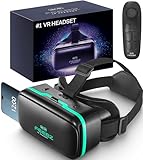
Overview: Specifically designed for children, the FEEBZ 2.0 VR headset prioritizes safety and simplicity above all else. Compatible with both iPhone and Android devices, it includes an Android remote and curated VR content tailored for young users. The headset features larger lenses and enhanced face padding to improve comfort and immersion for smaller faces, while included tutorial links help beginners get started quickly without frustration.
What Makes It Stand Out: Child-centric design elements distinguish this from generic phone VR headsets. The bundled beginner-friendly content and tutorial resources eliminate the intimidation factor for VR novices. Its claim of fitting more phone models than competitors ensures broader family device compatibility, reducing setup headaches for parents.
Value for Money: Positioned as a family-friendly option, the FEEBZ 2.0 offers good value through included content and kid-safe design. While pricier than barebones alternatives, the curated experience and educational resources justify the modest premium for parents seeking a turnkey solution for their children.
Strengths and Weaknesses: Strengths include kid-optimized ergonomics, included beginner content, broad phone compatibility, and educational focus. Weaknesses are limited advanced features, basic controller functionality, and dependence on smartphone quality for visual performance, which may disappoint older kids.
Bottom Line: An excellent choice for introducing children to virtual reality safely. The thoughtful design and included resources make it the most beginner-friendly option available, though tech-savvy kids may outgrow it quickly and want more advanced features.
10. DESTEK V5 VR Headset for Phone w/VR Gamepad, 128 Premium VR apps Included, Anti-Blue Eyes Protected HD Lenses, 110° FOV Virtual Reality Headsets for iPhone, Android Phone - Black

Overview: The DESTEK V5 represents a premium tier of smartphone VR, bundling extensive software with thoughtful hardware design. Supporting iPhone and Android devices, it includes 128 curated VR apps, a VR gamepad, and anti-blue light HD lenses. With an 110° field of view and lightweight construction, it aims to deliver the most complete phone-based VR experience available, refined over eight years of development.
What Makes It Stand Out: The massive library of 128 hand-picked, categorized apps eliminates content discovery challenges. Exclusive touch buttons enable intuitive interaction within virtual environments. The anti-blue light lenses protect developing eyes, while 92% light transmission maintains visual clarity. Eco-friendly materials and breathable padding prioritize long-session comfort.
Value for Money: While more expensive than basic phone VR holders, the V5 justifies its price through substantial included content and superior optics. Comparable to buying a mid-range headset plus dozens of paid apps, it offers savings for users committed to exploring phone VR seriously.
Strengths and Weaknesses: Strengths include extensive included apps, eye protection, comfortable materials, touch interaction, and gamepad inclusion. Weaknesses remain inherent to phone VR—no positional tracking, performance tied to phone specs, and limited longevity as users may upgrade to standalone headsets.
Bottom Line: The ultimate phone VR solution for users not ready for dedicated hardware. The curated content library and premium features make it worth the investment over cheaper alternatives, though it’s still a stepping stone to true VR systems.
Understanding the 2026 PC VR Landscape
The Evolution of VR Technology
Virtual reality hardware has undergone several transformative generations since its consumer debut. The 2026 market features headsets that have solved many fundamental problems from earlier years, including improved pixel density that eliminates the screen-door effect, advanced lens designs that expand the sweet spot, and tracking systems so precise they capture subtle hand movements without drift. These improvements aren’t incremental—they represent a fundamental shift in what developers can create and what gamers can expect from the medium.
Key Terminology Every Gamer Should Know
Before diving into specifications, familiarize yourself with essential VR terminology. “Persistence” refers to how long each frame remains illuminated, affecting motion blur. “Mura correction” addresses uneven brightness across the display panel. “Interpupillary distance (IPD)” is the space between your eyes, crucial for visual comfort. “Foveated rendering” uses eye tracking to allocate GPU resources only where you’re looking, dramatically improving performance. Understanding these concepts helps you cut through spec sheets and identify what truly matters for your use case.
Market Trends Shaping This Year
The PC VR market in 2026 emphasizes wireless connectivity without compromising visual quality, driven by advanced compression algorithms and Wi-Fi standards. Modular designs allow users to upgrade components rather than replacing entire headsets. Eye tracking has become standard rather than premium, enabling both performance optimization and new gameplay mechanics. Social and mixed-reality features blur the line between virtual and physical spaces, creating new possibilities for streamers and content creators.
Core Performance Specifications
Display Resolution and Pixel Density
Resolution in VR differs fundamentally from traditional monitors. While a 4K monitor spreads pixels across a large flat surface, VR headsets concentrate them in a small area directly in front of your eyes, then magnify them through lenses. This means pixel density—measured in pixels per inch (PPI)—matters more than raw resolution. Hardcore gamers should look for headsets offering at least 2000 PPI to ensure text readability and distant object clarity in competitive scenarios. Higher densities reduce eye strain during extended play and make virtual environments feel convincingly real.
Refresh Rate and Motion Clarity
Refresh rate directly impacts motion sickness and competitive responsiveness. The baseline for comfortable VR gaming in 2026 sits at 120Hz, with premium headsets pushing 144Hz or even experimental 180Hz modes. Higher refresh rates reduce motion-to-photon latency—the time between your head movement and the display updating—which is critical for maintaining immersion and preventing nausea. For fast-paced shooters or racing simulators, prioritize headsets that maintain high refresh rates consistently without frame drops.
Field of View Considerations
Field of view (FOV) determines how much of the virtual world you can see without turning your head. Human peripheral vision spans approximately 210 degrees horizontally, but most headsets deliver between 100-120 degrees. Wider FOV increases immersion but requires more GPU power and can introduce edge distortion if lenses aren’t properly designed. Consider your gaming priorities: flight simulators benefit enormously from wide FOV, while seated strategy games may not justify the premium.
Lens Technology and Sweet Spot
Lenses dramatically affect visual quality and comfort. Fresnel lenses, common in earlier headsets, create concentric rings and a narrow “sweet spot” where the image appears sharp. Pancake lenses, increasingly standard in 2026, use folded optics to reduce headset size while expanding the sweet spot across most of the view. Some premium options feature adjustable lens elements that let you fine-tune focus for your eyesight, potentially eliminating the need for glasses inside the headset.
Tracking and Motion Precision
Inside-Out vs. External Tracking
Tracking technology determines how accurately your movements translate into virtual space. Inside-out tracking uses cameras on the headset itself to monitor your environment and controllers, offering simpler setup without external sensors. External tracking systems use base stations placed around your room, providing higher precision and better occlusion handling—crucial for competitive gaming where every millimeter counts. Your choice depends on whether you prioritize convenience or absolute accuracy.
Controller Tracking Accuracy
Controller tracking quality varies significantly between systems. Look for headsets that maintain sub-millimeter accuracy even during rapid movements, with minimal jitter when holding still. Tracking volume—the 3D space where controllers work reliably—should extend beyond your immediate reach, allowing natural movements like reaching behind your back or drawing a bow. Latency below 20ms ensures your virtual hands feel connected to your real ones.
Full-Body Tracking Options
Hardcore gamers increasingly demand full-body tracking for social VR and enhanced immersion. Some headsets support additional trackers for hips and feet, while others use advanced computer vision to estimate leg position without extra hardware. Consider whether your favorite games support these features and whether you’re willing to invest in the complete tracking ecosystem. Wireless trackers with long battery life prevent cable tangles during active gameplay.
Comfort for Marathon Gaming Sessions
Weight Distribution and Balance
A 500-gram headset might feel light initially, but after two hours, every gram matters. Premium designs distribute weight across your entire head using rigid headbands, rather than pressing all force against your face. Rear-mounted battery packs serve as counterweights, creating better balance. Look for headsets where most weight sits on your forehead and the back of your skull, minimizing facial pressure and allowing airflow.
Facial Interface and Hygiene
The facial interface—the foam or silicone that touches your face—directly impacts comfort and hygiene. Replaceable, washable interfaces prevent sweat and oil buildup during intense sessions. Some materials resist absorbing moisture while others wick it away. For hardcore gamers playing daily, having multiple interfaces to rotate between washes is essential. Consider allergic reactions to certain materials and whether the interface accommodates glasses comfortably.
Adjustability for Different Head Sizes
One-size-fits-all rarely works for VR headsets. Quality options offer multiple adjustment points: headband tightening, top strap length, eye relief distance, and IPD adjustment ranging from 58mm to 72mm or beyond. Diopter adjustments for each eye let glasses-wearers use the headset without their spectacles. Test how easily you can adjust these settings while wearing the headset—frustrating adjustment mechanisms discourage proper fitting.
Immersive Audio Integration
Built-in vs. Off-Ear Audio
Built-in headphones provide convenience and integration, with some headsets offering impressive spatial audio that rivals dedicated gaming headsets. Off-ear speakers, which sit near but not on your ears, create a more natural soundscape and keep you aware of your physical environment—useful for streaming or playing with others in the room. Consider whether audio quality justifies using your own headphones, and check for standard audio jacks if you prefer your personal headset.
Spatial Audio Technologies
Modern VR headsets implement advanced spatial audio processing that accounts for your head’s geometry and even ear shape. This creates convincing 3D sound positioning, letting you locate enemies by footsteps or approaching vehicles. Look for headsets that support major spatial audio APIs used by game developers. Some premium options include personalized HRTF (head-related transfer function) calibration, dramatically improving audio realism.
Microphone Quality for Multiplayer
Clear communication is vital for team-based VR games. Headset microphones should offer noise cancellation to filter out fan noise and room echo, with pop filters to reduce breath sounds. Position-adjustable mics ensure optimal placement. Test microphone quality in noisy environments if possible—some headsets excel at isolating your voice while others pick up too much ambient sound, disrupting team coordination.
Connectivity and System Requirements
Wired vs. Wireless PC VR
Wired connections provide maximum bandwidth for uncompressed video, ensuring the clearest image and lowest latency. However, cables create trip hazards and resistance during active gameplay. Wireless solutions using Wi-Fi 6E or proprietary protocols have matured significantly in 2026, offering near-wired quality with complete freedom of movement. Your choice depends on your play style: seated sim racers may prefer wired reliability, while room-scale gamers benefit from wireless freedom.
Bandwidth and Compression Technologies
Wireless VR relies on video compression, which can introduce artifacts in high-motion scenes. Advanced codecs like H.265 and AV1 deliver better quality at lower bitrates, but require more powerful GPUs for encoding. Some headsets use dedicated compression chips to offload this work. Look for systems offering adjustable bitrate settings—higher values improve image quality at the cost of wireless stability. For competitive gaming, prioritize low-latency compression over maximum visual fidelity.
GPU and CPU Compatibility
VR demands significant computing power. Minimum specs might run simpler experiences, but hardcore gaming requires high-end GPUs capable of maintaining consistent frame rates at high resolutions. Check whether headsets support features like DLSS or FSR to boost performance through AI upscaling. Some headsets include ASW (asynchronous spacewarp) or similar technologies that generate intermediate frames, smoothing performance dips. Ensure your PC’s USB ports meet power and data requirements, as underpowered ports cause tracking issues.
Controller and Input Methods
Haptic Feedback Advancements
Modern VR controllers have evolved beyond simple rumble motors. Linear resonant actuators provide precise, localized feedback that simulates textures, impacts, and tension. Some controllers feature finger-tracking capacitive sensors, letting you naturally gesture and grab objects. Advanced haptics can simulate drawing a bowstring, feeling recoil, or touching different surfaces. These features deepen immersion but also increase controller weight and cost.
Finger Tracking Capabilities
Capacitive sensors and cameras track individual finger positions, enabling intuitive hand presence in VR. This allows natural gestures like pointing, thumbs-up, or playing virtual instruments. The technology’s accuracy varies—some systems track all five fingers flawlessly, while others struggle with certain hand positions. Consider whether your favorite games implement finger tracking meaningfully, as unsupported titles won’t benefit from this feature.
Alternative Input Accessories
Beyond standard controllers, the VR ecosystem includes racing wheels, HOTAS setups, haptic vests, and even gun stocks that physically connect controllers for realistic aiming. Check whether headsets support these accessories natively or require third-party software. Some premium setups include expansion ports or wireless protocols specifically for peripherals. Your investment in VR should accommodate your preferred gaming genres.
Software and Platform Ecosystem
Game Library and Exclusivity
Hardware capabilities mean nothing without compelling software. Different platforms offer varying game libraries, with some exclusives locked to specific headsets. Research whether must-play titles for your genres are available cross-platform or tied to particular ecosystems. Some headsets support official storefronts plus SteamVR, providing the broadest selection. Consider backward compatibility—can the headset run older VR classics, or is it limited to new releases?
Social and Multiplayer Features
VR’s social dimension has exploded, with virtual spaces for hanging out, watching movies, or attending concerts. Platform-level friends lists, voice chat, and avatar systems vary in quality. Some headsets offer seamless streaming to platforms like Twitch or YouTube, with mixed-reality capabilities showing your real body in the virtual world. For content creators, these features are as important as raw gaming performance.
Modding and Customization Support
The VR community thrives on mods that add content, improve graphics, or fix issues. Some platforms actively support modding with open file structures and developer tools, while others lock down systems, limiting customization. Research community activity around different headsets—active modding scenes extend a headset’s lifespan and value. Custom home environments, controller bindings, and performance tweaks can transform your experience.
Future-Proofing Your Investment
Upgrade Paths and Modularity
Technology moves fast, but your wallet appreciates longevity. Modular headsets let you upgrade displays, lenses, or tracking modules without buying entirely new systems. Some manufacturers commit to multi-year accessory compatibility, ensuring today’s controllers work with tomorrow’s headsets. Check the company’s history of supporting older hardware—frequent obsolescence forces expensive upgrades.
Firmware Update Policies
Active firmware development fixes bugs, improves performance, and occasionally adds features. Reputable manufacturers release regular updates years after launch. Investigate whether headsets receive updates automatically or require manual installation, and whether the company communicates its update roadmap. Community-driven firmware can revive abandoned hardware, but official support is more reliable.
Community and Developer Support
A headset’s value extends beyond its manufacturer. Active communities create custom software, troubleshooting guides, and performance optimizations. Developer support ensures new games target the hardware effectively. Check forums, Discord servers, and subreddit activity—vibrant communities solve problems and extend functionality long after official support wanes.
Making Your Final Decision
Assessing Your Gaming Priorities
Start by listing your primary VR use cases. Flight simulators demand high resolution and wide FOV; competitive shooters prioritize tracking precision and high refresh rates; social VR benefits from comfort and audio quality. Rank these priorities, then evaluate headsets based on how well they match your specific needs rather than aggregate review scores. A headset perfect for one gamer might disappoint another with different preferences.
Budget vs. Performance Trade-offs
The law of diminishing returns applies heavily to VR. Mid-range headsets in 2026 offer 80% of premium performance at half the cost. Set a realistic budget that includes accessories: extra facial interfaces, upgraded head straps, wireless adapters, and tracking peripherals add up. Consider total cost of ownership over two to three years, including potential upgrades and replacement parts.
Where to Purchase and Warranty Considerations
Buy from authorized retailers to ensure valid warranties and return policies. Some manufacturers offer extended warranties covering accidental damage—valuable for active VR gaming where impacts and sweat occur. Check warranty lengths and what they cover: displays, controllers, and cables fail more often in VR than traditional peripherals. Consider the manufacturer’s reputation for honoring warranty claims and turnaround times for repairs.
Setting Up Your VR Gaming Space
Room-Scale vs. Seated Configurations
Your available space dictates headset choice. Room-scale setups require 2m x 2m minimum for comfortable movement, with some experiences needing more. Seated configurations work in smaller spaces but limit certain games. Measure your area and check game requirements before committing. Some headsets adapt better to small spaces, using advanced boundary systems that pause games when you near obstacles.
Lighting and Environmental Factors
Tracking systems struggle with direct sunlight, reflective surfaces, and inconsistent lighting. IR-based external tracking works in darkness, while camera-based inside-out tracking needs moderate ambient light. Consider your gaming schedule and room setup—will you need blackout curtains or can you control lighting? Some headsets include IR illuminators for dark room performance.
Cable Management Solutions
If you choose wired VR, cable management becomes critical. Overhead pulley systems suspend cables from the ceiling, providing freedom while preventing tangles. Retractable dog-leash style systems automatically take up slack. For wireless setups, consider router placement and network congestion—dedicated Wi-Fi 6E routers for VR prevent interference from household devices.
Maintenance and Care for Longevity
Cleaning and Hygiene Protocols
Daily use demands regular cleaning. Sweat and oils degrade facial interfaces and lenses over time. Use microfiber cloths for lenses—never paper towels or tissues that scratch coatings. Washable facial interfaces should air dry completely before use to prevent mold. Controller grips absorb hand oils; replaceable covers extend their life. Establish a weekly cleaning routine to maintain hygiene and hardware condition.
Storage and Transportation
Proper storage prevents lens damage and cable stress. Keep headsets in cases when not in use, away from direct sunlight that can degrade displays. Store cables loosely coiled without sharp bends. For LAN parties or demos, hard cases protect against impacts. Consider the headset’s portability—some fold compactly while others require bulky original packaging.
Firmware and Software Maintenance
Keep drivers, firmware, and platform software updated, but don’t install updates the day before important gaming sessions—bugs happen. Backup custom controller bindings and settings before major updates. Periodically clean up cached data and old installations that consume drive space. Monitor system temperatures during VR; overheating components throttle performance and cause stuttering.
Troubleshooting Common Issues
Tracking Problems and Solutions
Tracking loss manifests as drifting controllers or jittery headset movement. Start by checking for reflective surfaces—mirrors, picture frames, even glossy tabletops confuse cameras. Ensure base stations have clear line-of-sight or that inside-out cameras aren’t blocked by hair or headset straps. Update firmware and check for conflicting USB devices. In extreme cases, USB bandwidth limitations require PCIe expansion cards.
Performance Optimization Techniques
Stuttering breaks immersion and causes discomfort. Lower supersampling values incrementally to find the performance-quality sweet spot. Enable motion smoothing technologies as a safety net, not a crutch. Close background applications that consume CPU cycles. For wireless VR, reduce interference by switching to 6GHz bands and minimizing obstacles between router and headset. Monitor GPU and CPU usage to identify bottlenecks.
Comfort and Fit Adjustments
Discomfort often stems from improper fit rather than headset weight. Ensure the rear pad sits at the base of your skull, not on top. Adjust the top strap to lift weight off your cheeks. If you feel pressure on your forehead, the headset sits too high. Take regular breaks—VR fatigue accumulates differently than monitor gaming. Consider aftermarket padding or counterweights if standard adjustments fail.
Frequently Asked Questions
What refresh rate should I prioritize for competitive VR gaming?
Aim for a minimum of 120Hz with a target of 144Hz for competitive play. Higher refresh rates reduce motion-to-photon latency below 20ms, which is critical for maintaining immersion and preventing motion sickness during fast movements. Some headsets offer experimental 180Hz modes, but stability at 144Hz provides a better experience than occasional dips at higher rates.
Is wireless PC VR finally viable for hardcore gaming in 2026?
Yes, wireless VR has matured significantly with Wi-Fi 6E and advanced compression codecs. Modern implementations deliver near-wired quality with imperceptible latency for most users. The freedom of movement often outweighs minor quality differences. For absolute competitive edge, wired still holds a slight advantage, but wireless is no longer a compromise for casual or even serious gaming.
How important is eye tracking for gaming?
Eye tracking has become essential in 2026. It enables foveated rendering, boosting performance by 30-50% by reducing resolution in peripheral vision. Social VR benefits from realistic avatars with eye contact. Some games use gaze-based interactions or aim assistance. While not every title leverages it, eye tracking future-proofs your headset and provides immediate performance benefits.
Can I wear glasses with modern VR headsets?
Most headsets accommodate glasses, but it’s not ideal. Glasses scratch lenses and reduce FOV. Better options include: headsets with diopter adjustments, prescription lens inserts that snap into the headset, or contact lenses. If you must wear glasses, use protective lens rings and choose headsets with generous eye relief adjustment.
What’s the minimum GPU requirement for high-end VR in 2026?
For high-resolution headsets at 120Hz or above, target an RTX 4070-class GPU or equivalent. This ensures consistent performance in demanding titles with some headroom for supersampling. Older GPUs can work but may require aggressive foveated rendering and lowered settings. VRAM is critical—12GB minimum for modern titles, with 16GB recommended for future-proofing.
How much physical space do I really need?
Absolute minimum is 1.5m x 1.5m for standing experiences, but 2m x 2m provides comfortable arm movement. Room-scale games shine at 3m x 3m or larger. Seated games require only enough space to extend your arms. Always account for boundary buffers—leave 30cm between your play area and walls or furniture to prevent accidents.
Are inside-out tracking systems accurate enough for competitive play?
Modern inside-out tracking matches external tracking for most scenarios, with sub-millimeter accuracy and low latency. They excel in convenience and setup speed. However, external tracking still handles occlusion better—when controllers pass behind your body—and offers larger tracking volumes. For tournament-level competition, external tracking provides marginal advantages, but inside-out is perfectly viable for 99% of gamers.
How long should I expect a VR headset to last?
With proper care, expect 3-5 years of relevant performance. Displays and lenses don’t degrade, but tracking technology and connectivity standards evolve. Modular headsets extend lifespan through component upgrades. Manufacturer support typically lasts 2-3 years for firmware updates. Community support can keep older headsets viable longer, but expect to upgrade every 3-4 generations to stay current.
What’s the difference between LCD and OLED displays in VR?
OLED offers perfect blacks and infinite contrast, ideal for space games and horror titles, but can suffer from black smear (dark ghosting) and lower brightness. LCD provides higher peak brightness and eliminates smear, with modern mini-LED backlights narrowing the contrast gap. For mixed-content gaming, LCD is often preferable, while OLED excels in dark, atmospheric experiences. Both technologies deliver excellent results in 2026.
How do I prevent motion sickness in VR?
Start with short sessions and build tolerance gradually. Ensure your headset maintains high, stable frame rates—drops below refresh rate cause discomfort. Use teleportation movement in games initially, then transition to smooth locomotion as you adapt. Keep a fan blowing on you to provide a constant reference point. Ginger supplements help some users. Most importantly, stop immediately when you feel queasy; pushing through worsens adaptation. With proper setup and pacing, most gamers adapt within 1-2 weeks.
See Also
- 10 Must-Have PC VR Headsets for Hardcore Gamers in 2026
- The 10 Best PC VR Headsets for High-Performance Gamers in 2026
- 10 Must-Have PC VR Headsets for Gamers in 2026
- The 10 Ultimate Best Immersive VR Headsets for Full Sensory Engagement in 2026
- Top 10 Best Gaming Headsets for Competitive PC Gamers in 2026